
Supplementary Material of “Penelope Rich: Mapping the Mobility of a Sixteenth-Century Aristocratic Woman”
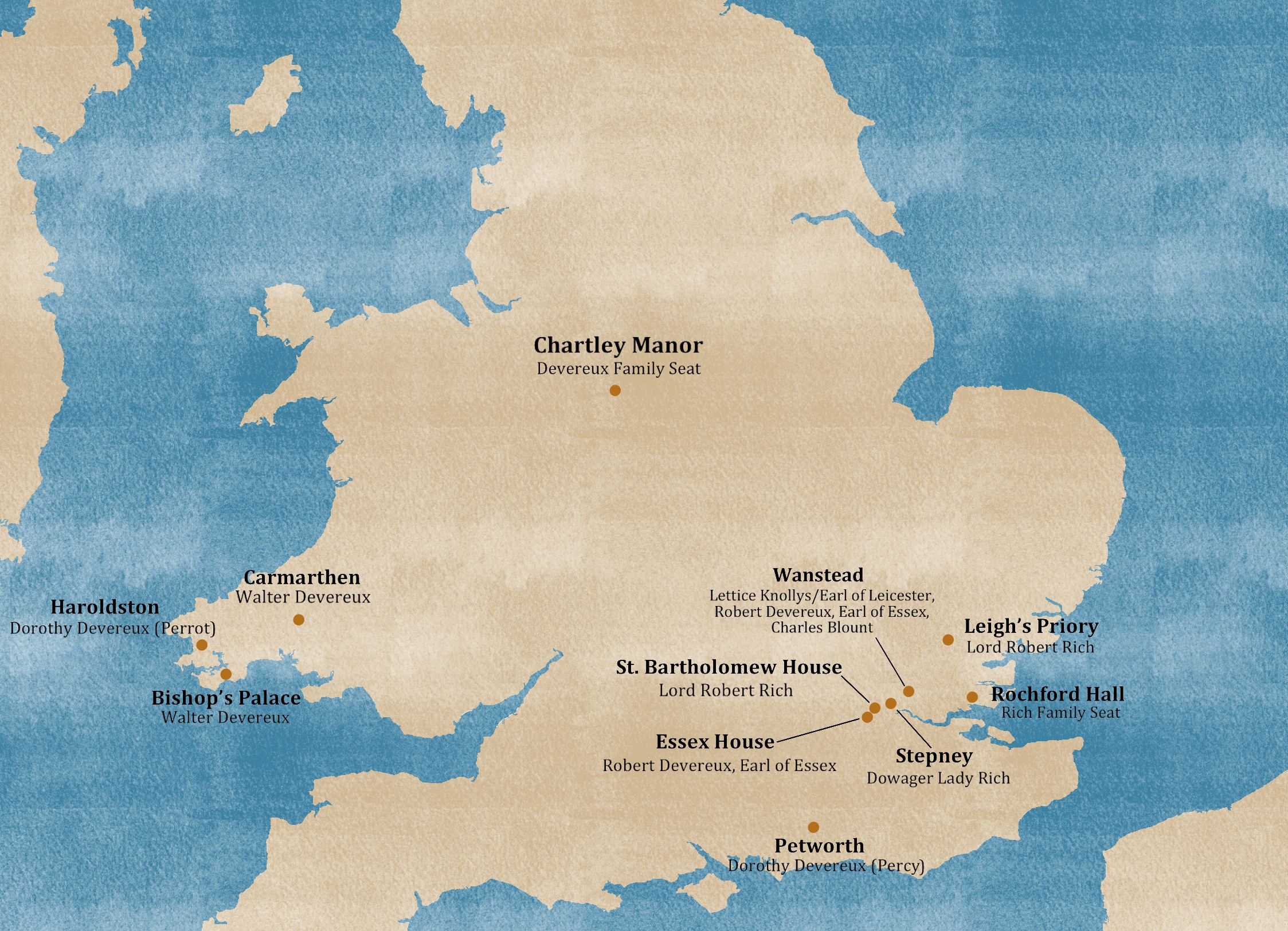
Figure 1. Penelope Devereux Rich Blount, Lady Rich, Baroness of Essex, Countess of Devonshire represented as a map. Each surname and title has attendant estates that become the baseline for Penelope’s personal map, anchoring her movement…
Listed in Image | publication by group Iter Community
Version 3.0 - published on 29 Jul 2026 doi:10.25547/CX1K-YP80 - cite this
Licensed under Creative Commons BY-NC 4.0

Description
Figure 1. Penelope Devereux Rich Blount, Lady Rich, Baroness of Essex, Countess of Devonshire represented as a map. Each surname and title has attendant estates that become the baseline for Penelope’s personal map, anchoring her movement throughout her life. Chartley, for example, the Devereux family seat where she was born, also becomes a favored haven near the end of her life when her brother Robert is in possession of the property. Each destination is associated with one of her surnames.
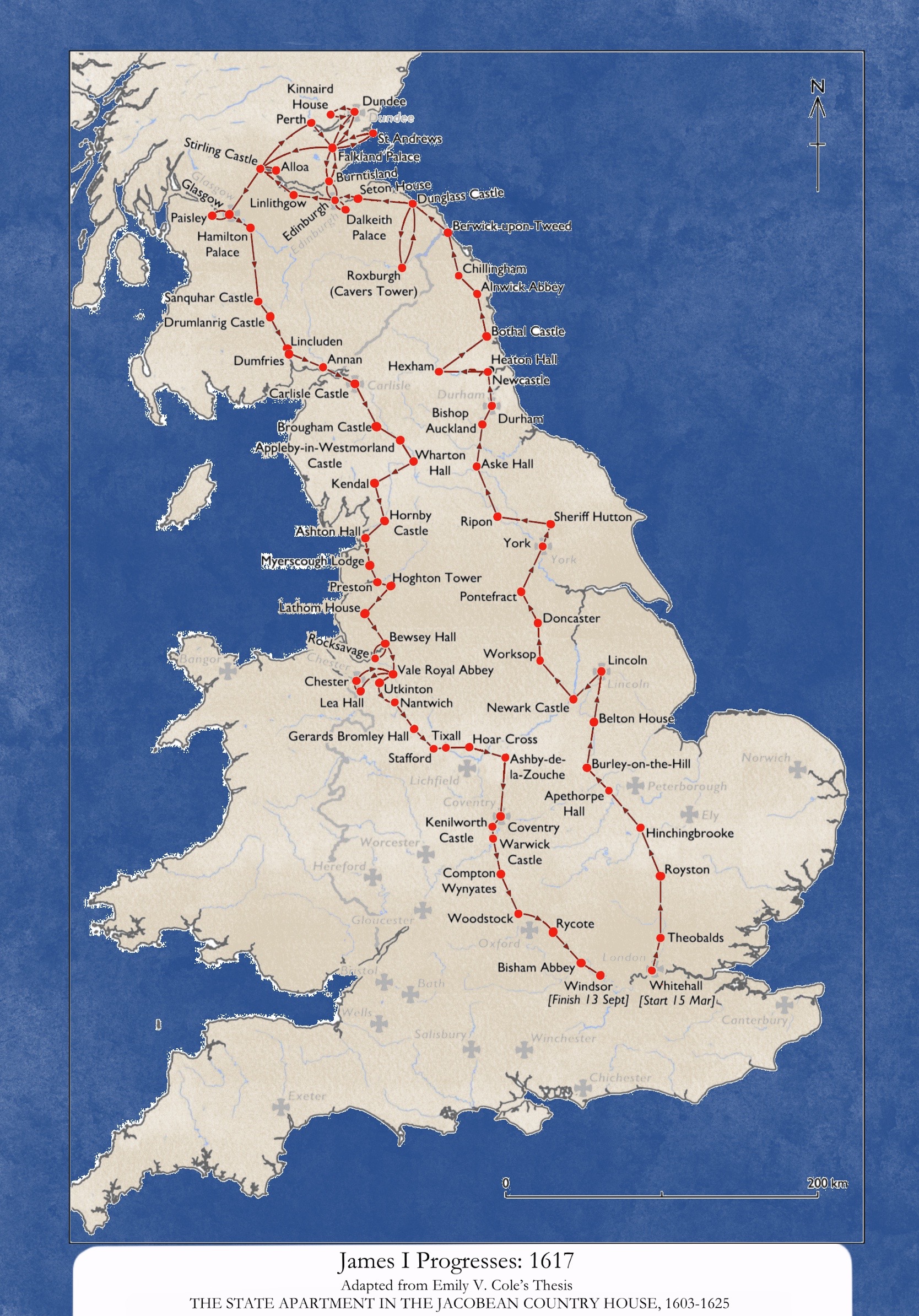
Figure 2. A sample progress of James I from 1617, adapted from Cole 2010. James traveled further distances, in part to visit his home country, but he also tended to stay with the same hosts rather than create a diversified itinerary.
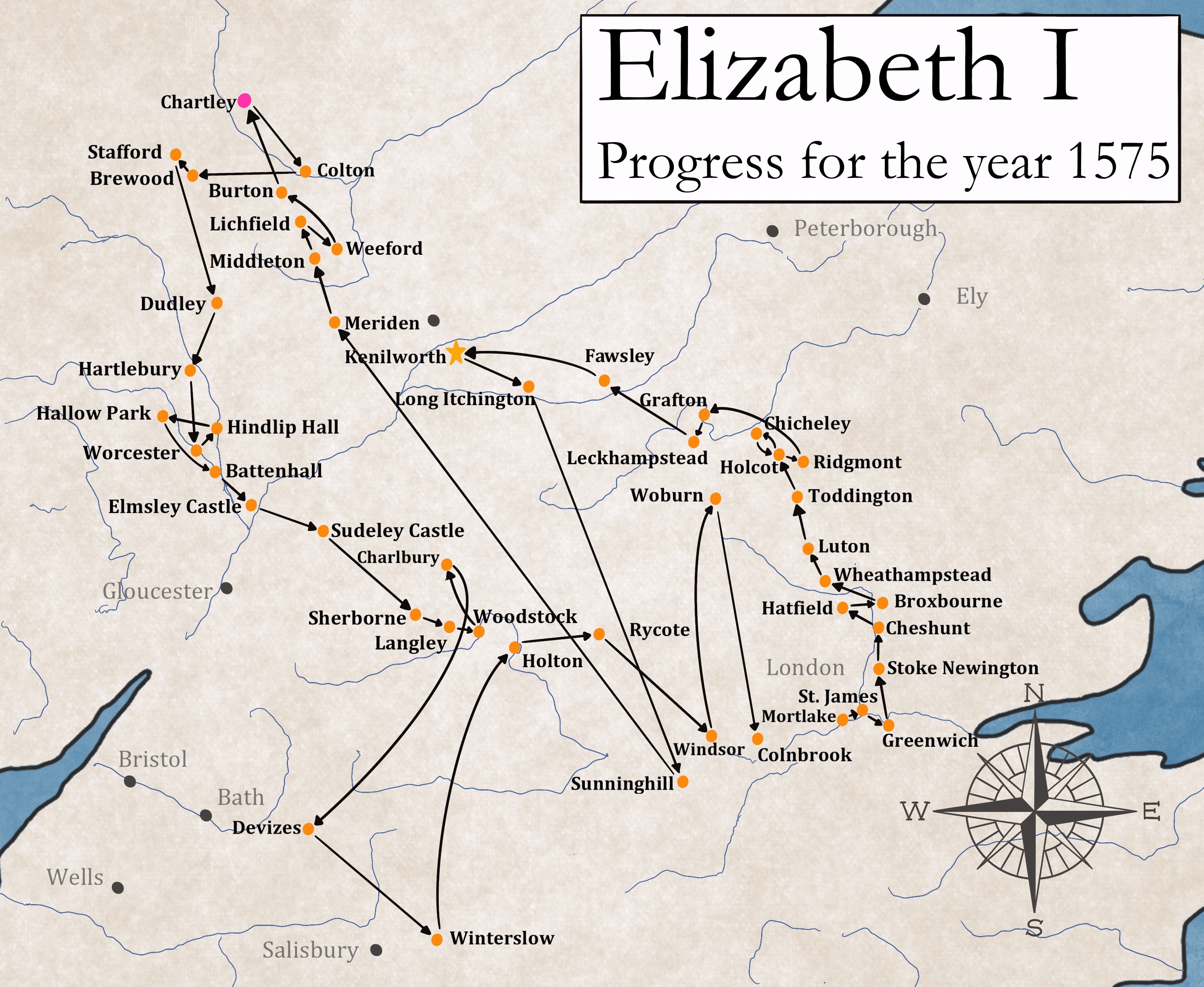
Figures 3–4. Elizabeth on progress in 1575 (chosen because she visited the Devereux at Chartley that year) and in 1589 (chosen because Penelope began secret missives to James VI in this year). Primarily derived from Colthorpe 2017.
Location in HSS Commons repository
Please see 'Notes' below for any suggested/official citation information added by the author(s) of this work. Otherwise, you can cite the HSS Commons instance of this publication as follows:
- Gerit Quealy, (2026), "Supplementary Material of “Penelope Rich: Mapping the Mobility of a Sixteenth-Century Aristocratic Woman”", HSSCommons: (DOI: 10.25547/CX1K-YP80)
Tags
Notes
Quealy, Gerit. 2025. “Penelope Rich: Mapping the Mobility of a Sixteenth-Century Aristocratic Woman.” In New Technologies and Renaissance Studies IV: The Changing Shape of Digital Early Modern Studies, edited by Randa El Khatib and Caroline Winter, 227–59. New Technologies in Medieval and Renaissance Studies 12. Iter Press. https://iterpress.org/9781649591197/new-technologies-and-renaissance-studies-iv/.
Publication preview
Iter Community
This publication belongs to the Iter Community group.
When watching a publication, you will be notified when a new version is released.