
Supplementary Material of ‘Designing an Educational Video Game for Shakespeare’s Hamlet’
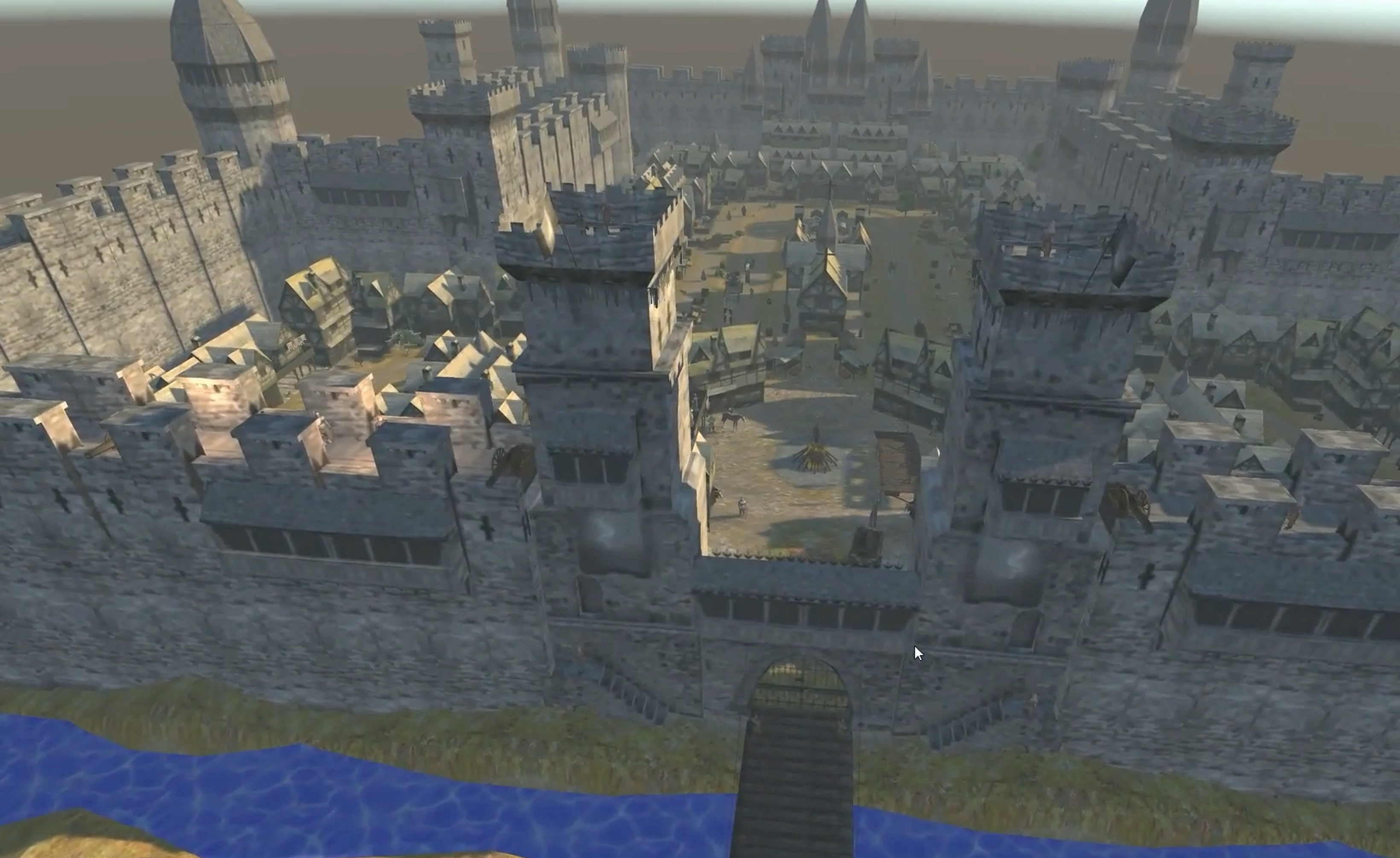
Figure 1. An aerial view of the courtyard of Perchance’s representation of Castle Elsinore.
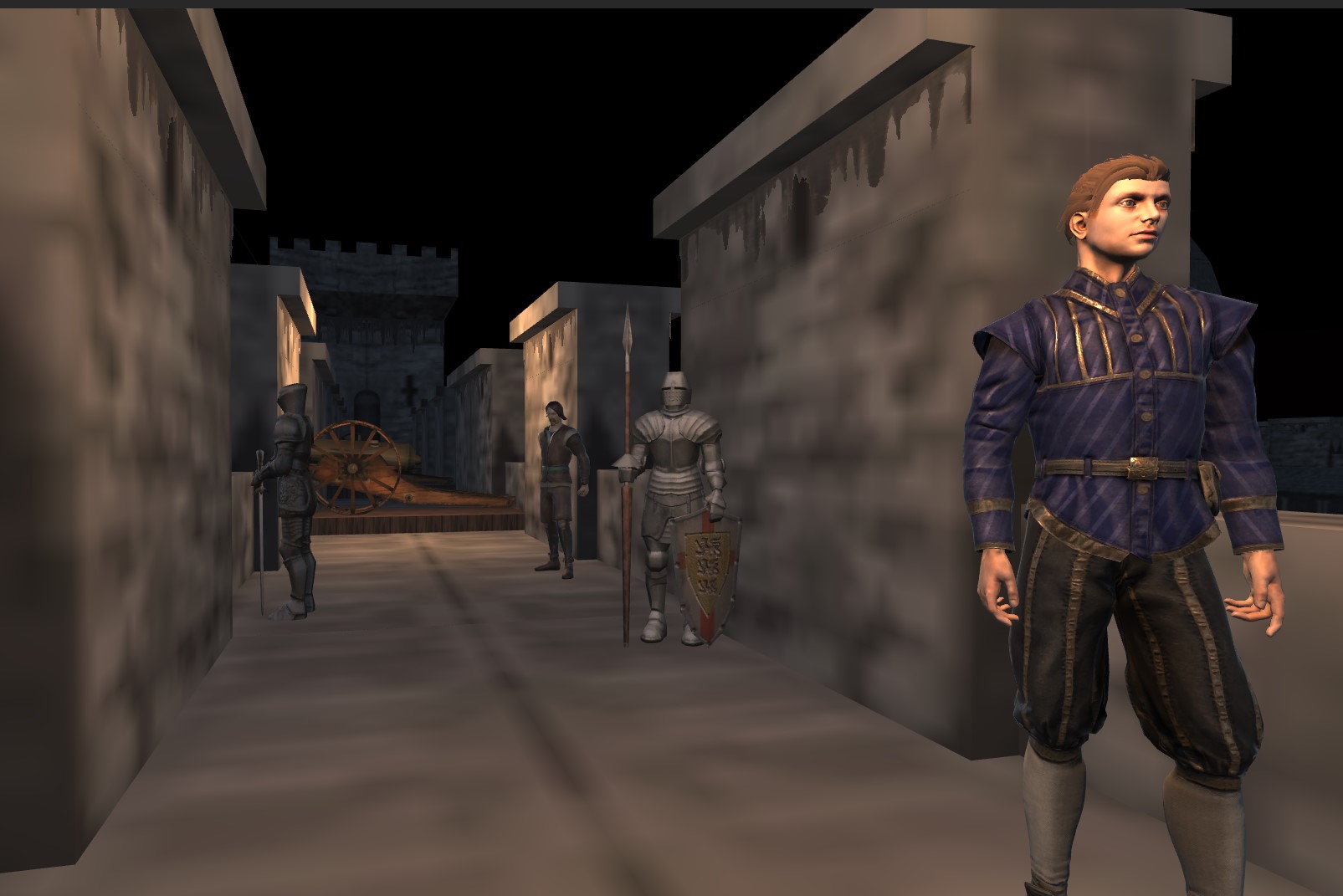
Figure 2. The ramparts scene rendered in the Unity game engine, depicting character models for Hamlet, Marcellus, Bernardo, and Horatio.
Figure…
Listed in Image | publication by group Iter Community
Version 2.0 - published on 29 Jul 2026 doi:10.25547/VRSA-QS88 - cite this
Licensed under Creative Commons BY-NC 4.0


Description
Figure 1. An aerial view of the courtyard of Perchance’s representation of Castle Elsinore.
Figure 2. The ramparts scene rendered in the Unity game engine, depicting character models for Hamlet, Marcellus, Bernardo, and Horatio.
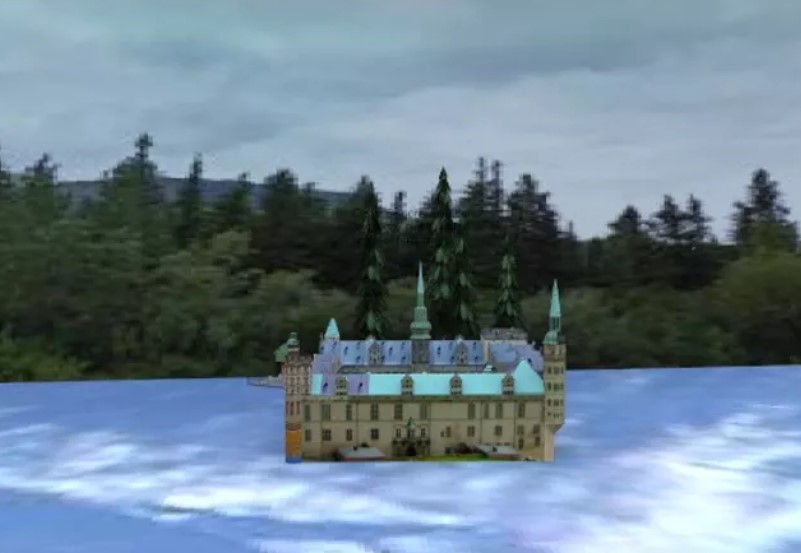
Figure 3. An early, low-resolution representation of Castle Elsinore we created in SketchUp.
Figure 4. Four different character models (in different poses) we used in the game. Choosing character models for a realistic depiction of the play helps students feel connected to the game.
Figure 5. Coding the ramparts scene in the Unity game design software with dialogue bubbles.
Figure 6. The castle courtyard where players will interact with characters and investigate the mystery behind Hamlet.
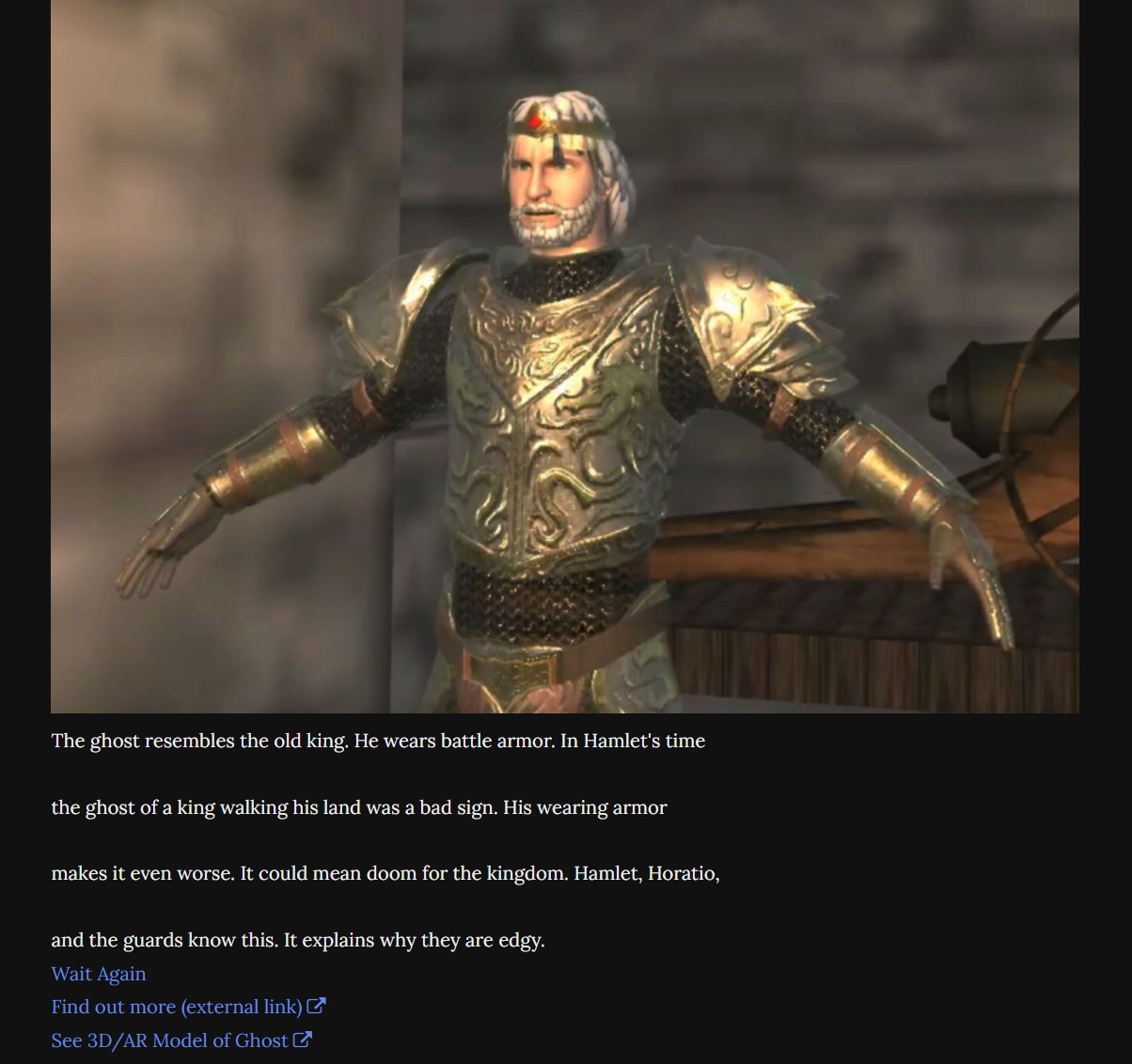
Figure 7. The appearance of the ghost in the Twine game engine.
Location in HSS Commons repository
Please see 'Notes' below for any suggested/official citation information added by the author(s) of this work. Otherwise, you can cite the HSS Commons instance of this publication as follows:
- John Misak, Kevin LaGrandeur, (2026), "Supplementary Material of ‘Designing an Educational Video Game for Shakespeare’s Hamlet’", HSSCommons: (DOI: 10.25547/VRSA-QS88)
Tags
Notes
Misak, John, and Kevin LaGrandeur. 2025. “Designing an Educational Video Game for Shakespeare’s Hamlet.” In New Technologies and Renaissance Studies IV: The Changing Shape of Digital Early Modern Studies, edited by Randa El Khatib and Caroline Winter, 397–421. New Technologies in Medieval and Renaissance Studies 12. Iter Press. https://iterpress.org/9781649591197/new-technologies-and-renaissance-studies-iv/.
Publication preview
Iter Community
This publication belongs to the Iter Community group.
When watching a publication, you will be notified when a new version is released.