
Supplementary Material of ‘Dear Galileo: Letters as Data on Astronomy’
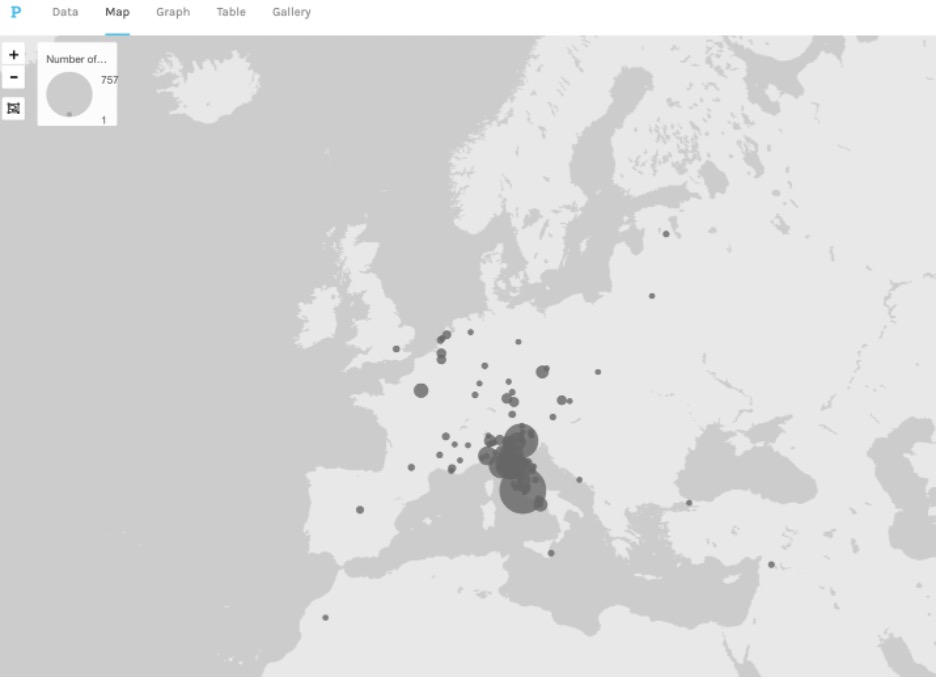
Figure 1. A map visualization of the locations from where people wrote to Galileo, with points proportionally sized based on the numbers of letters sent locally. Therefore, more letters sent from a location correspond to a bigger dot, for a total of…
Listed in Image | publication by group Iter Community
Version 2.0 - published on 27 Jul 2026 doi:10.25547/P7G3-8Q33 - cite this
Licensed under Creative Commons BY-NC 4.0



Description
Figure 1. A map visualization of the locations from where people wrote to Galileo, with points proportionally sized based on the numbers of letters sent locally. Therefore, more letters sent from a location correspond to a bigger dot, for a total of 2,700 letters written by 370 correspondents discussing astronomy from 1588 to 1642; 11 of those correspondents were women. In a further development of this project, I intend to also trace distance between sender and recipient, so that letters sent locally are marked visually. Letters traveling a greater distance after the Inquisition trial and Copernican ban would have faced greater challenges, and those instances highlight the present digital project beyond mapping and network visualization goals.
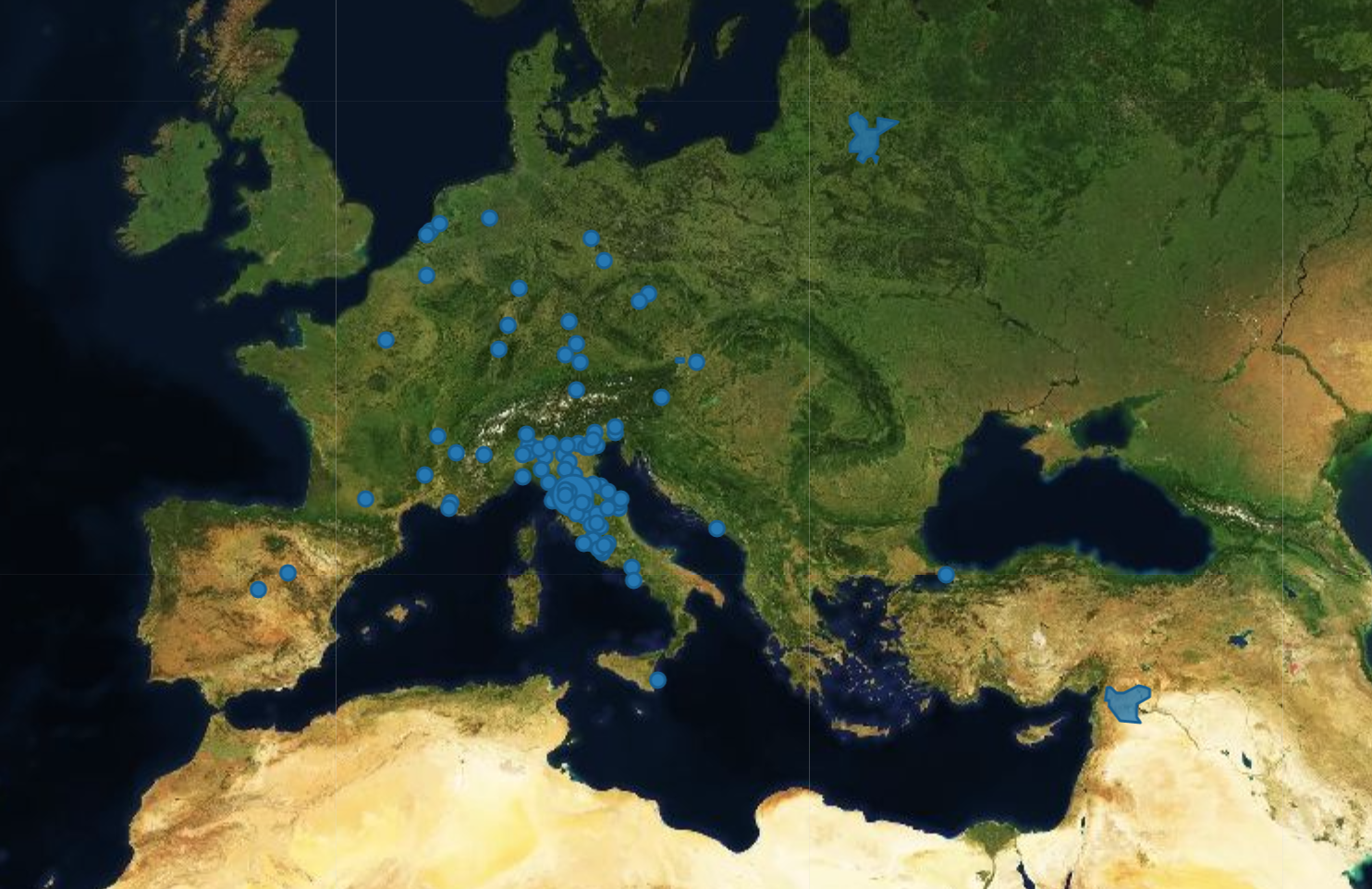
Figure 2. An exploratory map visualization of the areas from where people wrote to Galileo. Galileo lived in Pisa, Florence, the neighboring small towns of Bellosguardo and Arcetri, and Padua.
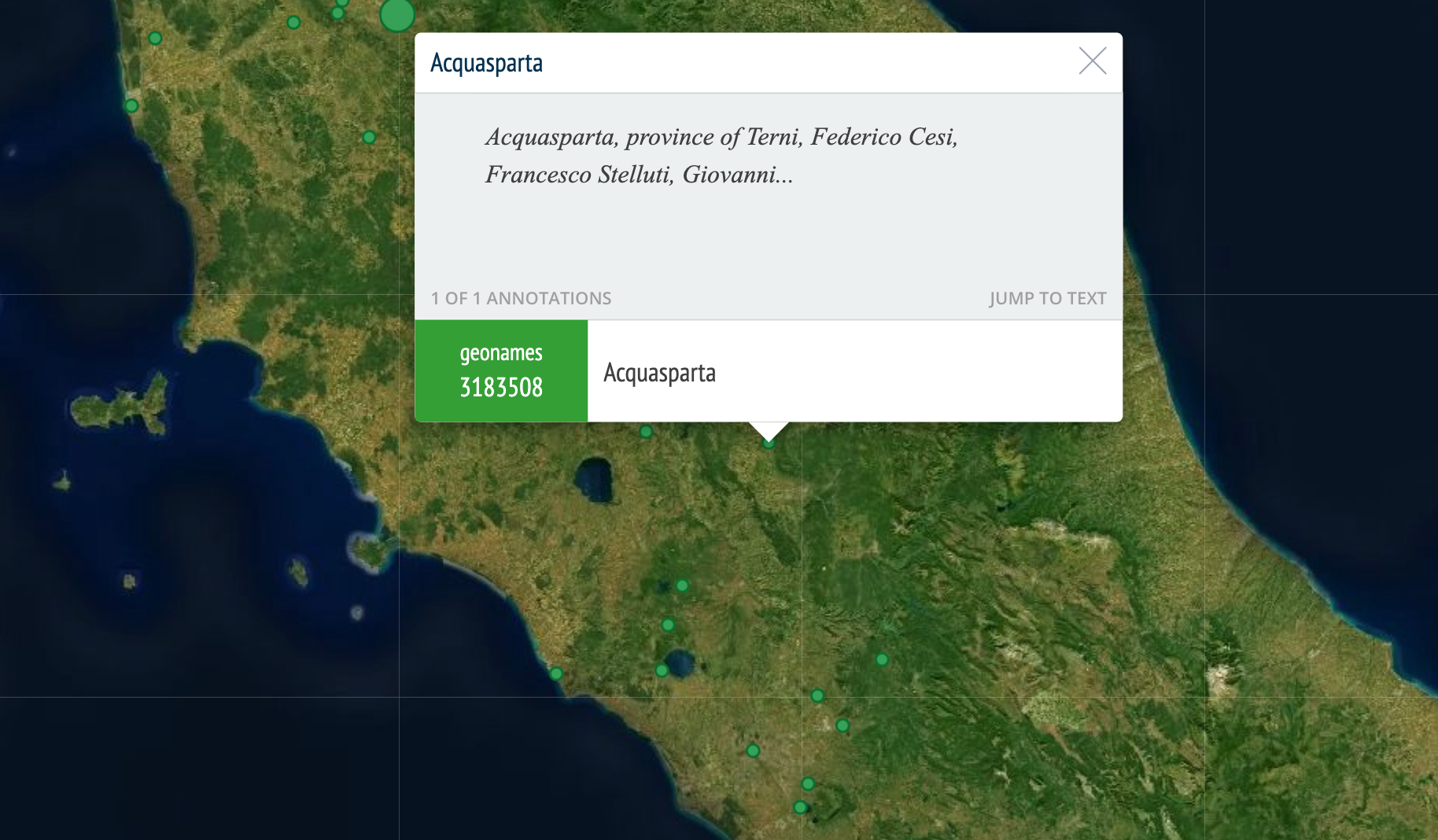
Figure 3. A detail of the Recogito map visualization, zooming in on the location of Acquasparta, where Prince Federico Cesi’s villa was located, and where he gathered scholars belonging to the Accademia dei Lincei that he had founded and sponsored.
Figure 4. An entry in the dataset of Galileo’s correspondence, with an item from a Jesuit scholar, Christopher Clavius, writing from Rome.
Figure 5. A letter by Galileo Galilei to Father Benedetto Castelli, a former student of Galileo who became a prominent mathematician, defending the role of science in investigating nature (21 December 1613). Wikimedia Commons.
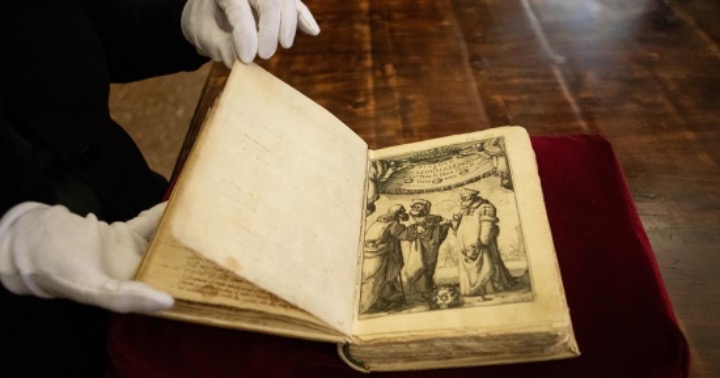
Figure 6. Galileo’s personal, annotated copy of the Dialogo sopra i due massimi sistemi del mondo (Dialogue Concerning the Two Chief World Systems). Photo courtesy of the Biblioteca del Seminario Vescovile, Padua, Italy. The book has many handwritten marginal notes in Galileo’s own hand. While the book preserves an internal conversation that Galileo was having with himself when revisiting his own book after it was printed, the letters he exchanged, conversely, show an interconnected community of readers and writers discussing astronomical topics, looking for more information but also supporting or criticizing the new discoveries as well.
Figure 7. Letter by Galileo Galilei to Doge Leonardo Donato (early 1610), who ruled in Venice from 1606 to 1612. This manuscript, housed at the University of Michigan Library, is actually a 20th-century forgery. Wikimedia Commons.
Location in HSS Commons repository
Please see 'Notes' below for any suggested/official citation information added by the author(s) of this work. Otherwise, you can cite the HSS Commons instance of this publication as follows:
- Caterina Agostini, (2026), "Supplementary Material of ‘Dear Galileo: Letters as Data on Astronomy’", HSSCommons: (DOI: 10.25547/P7G3-8Q33)
Tags
Notes
Agostini, Caterina. 2025. “‘Dear Galileo’: Letters as Data on Astronomy.” In New Technologies and Renaissance Studies IV: The Changing Shape of Digital Early Modern Studies, edited by Randa El Khatib and Caroline Winter, 197–226. New Technologies in Medieval and Renaissance Studies 12. Iter Press. https://iterpress.org/9781649591197/new-technologies-and-renaissance-studies-iv/.
Publication preview
Iter Community
This publication belongs to the Iter Community group.
When watching a publication, you will be notified when a new version is released.