
Supplementary Material of ‘Print Networks of Early Modern Astronomy in Galileo’s Library’
Figure 1. Title page of the first edition of Galileo’s Sidereus nuncius (1610), known in English as the Starry Messenger. Image credit: Sidereus nuncius magna, longeque admirabilia spectacula pandens [. . .] Galileo Galileo [. . .]: nuper…
Listed in Image | publication by group Iter Community
Version 2.0 - published on 27 Jul 2026 doi:10.25547/7ZR9-8Z14 - cite this
Licensed under Creative Commons BY-NC 4.0




Description
Figure 1. Title page of the first edition of Galileo’s Sidereus nuncius (1610), known in English as the Starry Messenger. Image credit: Sidereus nuncius magna, longeque admirabilia spectacula pandens [. . .] Galileo Galileo [. . .]: nuper a se reperti beneficio sunt observata in lunae facie, fixis innumeris, lacteo circulo, stellis nebulosis, apprime vero in quatuor planetis circa [. . .]. Venetiis: Thomam Baglionum, 1610. ETH-Bibliothek Zürich, Rar 4342: 1, doi.org/10.3931/e-rara-695/Public Domain Mark.
Figure 2. Title page of Giulio Cesare Lagalla’s De phoenominis in orbe lunae and De luce et lumine (1612). Image credit: De phoenomenis in orbe lunae novi telescopii usu a [. . .] Gallileo Gallileo nunc iterum suscitatis physica disputatio: necnon De luce et lumine. Venetiis: Thomam Balionum, 1612. ETH-Bibliothek Zürich, Rar 2076, doi.org/10.3931/e-rara-14760/Public Domain Mark.
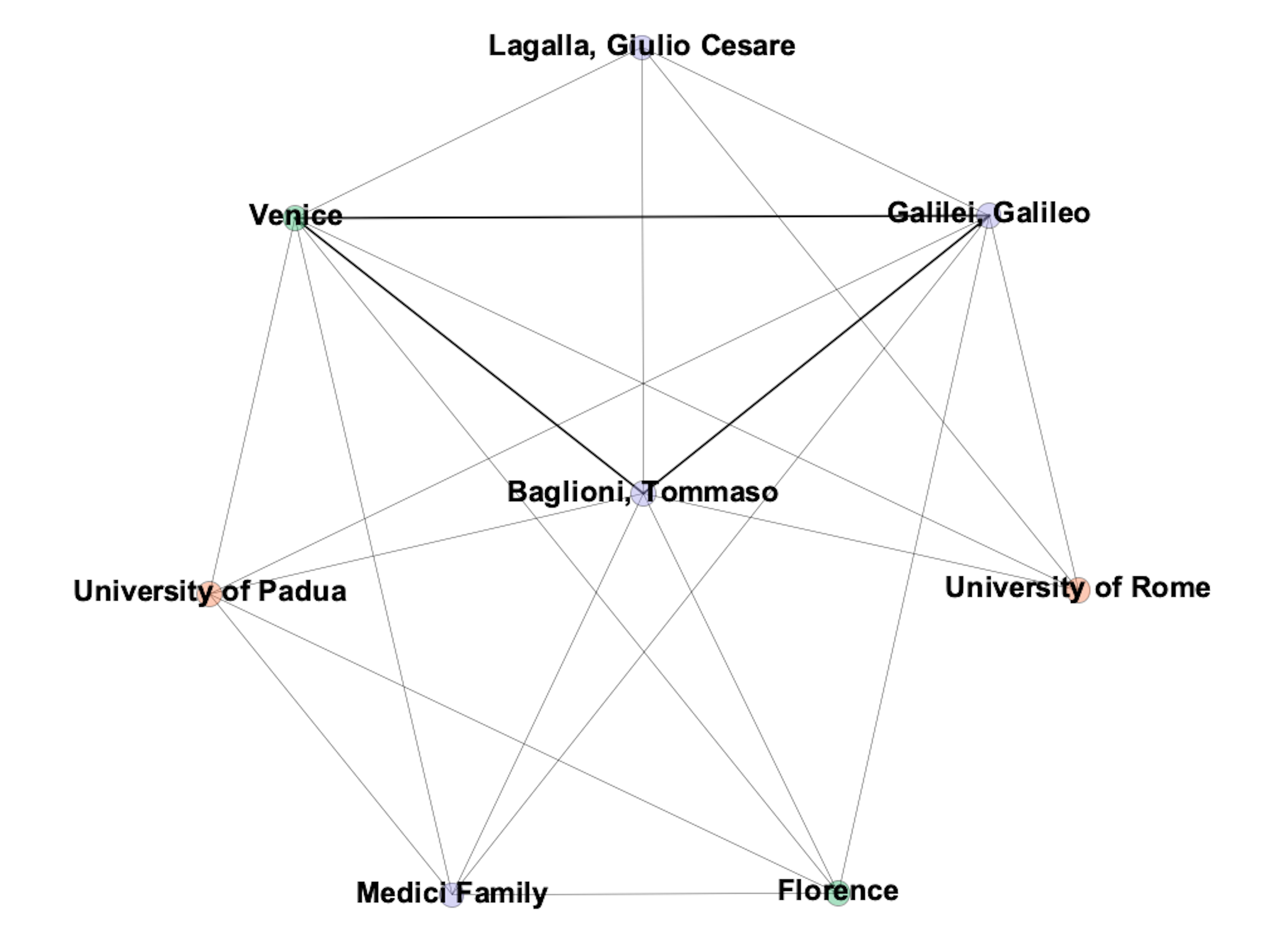
Figure 3. Gephi network representation of the title pages of Galileo’s Starry Messenger and Lagalla’s De phoenominis in orbe lunae, which highlights interpersonal and geographic relationships facilitated by Baglioni’s press (center) and less connected sites of direct exchange (i.e., the universities). Nodes in the color image are categorized by person (purple), place (green), or institution (orange). Edges between nodes indicate that they are mentioned together on a title page; thickness of the line is relative to the number of times the nodes are mentioned together. Node and label size are uniform. The Fruchterman-Reingold layout algorithm has been used for legibility. Image credit: Crystal Hall.
Figure 4. Partial view of a Gephi network of title pages of the 152 books of astronomy in Galileo’s library, highlighting connections to the press of Tommaso Baglioni and representing the geographic differentiation of intellectuals alongside connective capacity of the printer Baglioni. Nodes in the color image are categorized by person (purple), place (green), or institution (orange). Edges between nodes indicate that they are mentioned together on a title page; thickness of the line is relative to the number of times the nodes are mentioned together. Node and label size are uniform. A Force Atlas layout algorithm was used to visualize interconnected subgroups. Image credit: Crystal Hall.
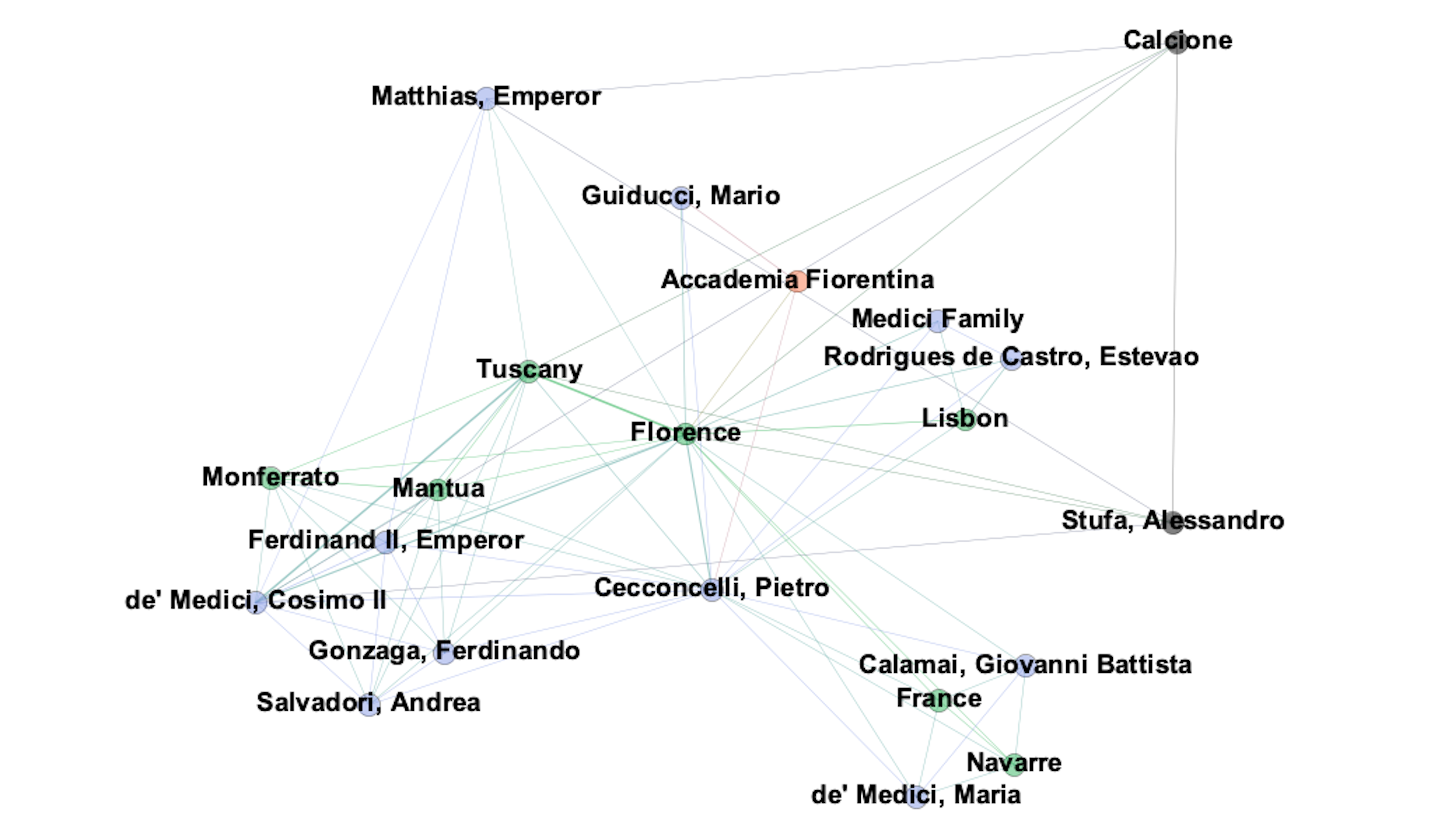
Figure 5. Partial view of a Gephi network of title pages of the 152 books of astronomy in Galileo’s library, highlighting connections to the press of Pietro Cecconcelli and representing the geographic differentiation of intellectuals and patrons and the role of Cecconcelli’s press at the center. Nodes in the color image are categorized by person (purple), place (green), or institution (orange). Edges between nodes indicate that they are mentioned together on a title page; thickness of the line is relative to the number of times the nodes are mentioned together. Node and label size are uniform. A Force Atlas layout algorithm was used to emphasize interconnected subgroups. Image credit: Crystal Hall.
Figure 6. Printer’s device on the title page of Mario Guiducci’s Discorso delle Comete (1619) showing a diagram of four stars in orbit around a larger central star, presumably Jupiter, framed by the six Medici palle (balls). Image credit: Discorso delle Comete di Mario Guiducci fatto da lui nell’ Accademia Fiorentina nel suo Medesimo Consolato. In Firenze: Nella Stamperia di Pietro Cecconcelli [. . .], 1619. ETH-Bibliothek Zürich, RAR 1950, doi.org/10.3931/e-rara-417/Public Domain Mark.
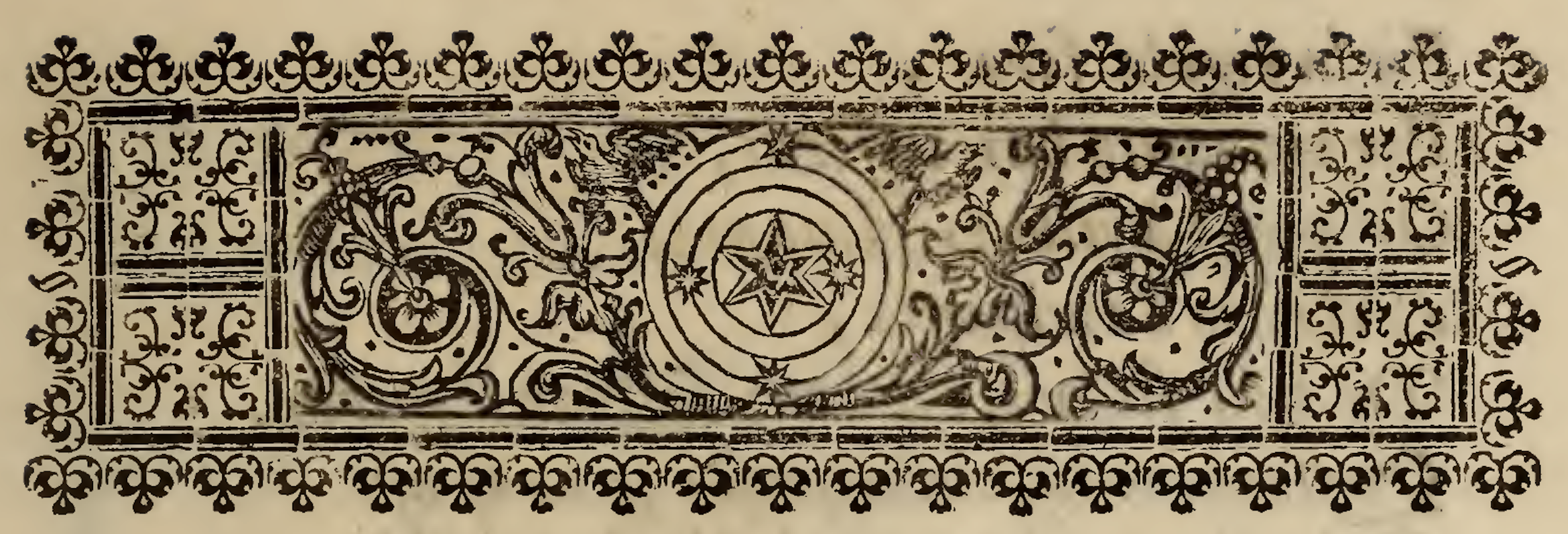
Figure 7. Ornamentation at the head of folio 13r in Salvadori’s Il Medoro (1623) showing a variation of Cecconcelli’s printer’s device. Image credit: Thomas Fisher Rare Book Library, University of Toronto.
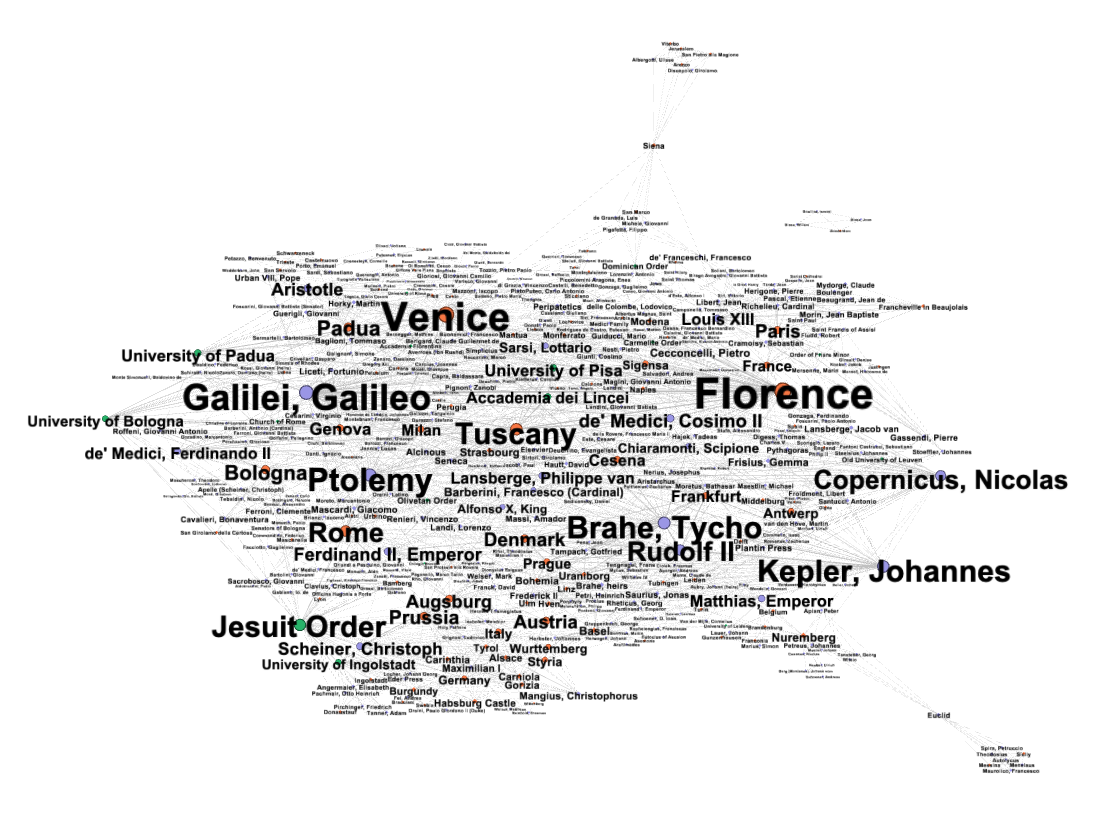
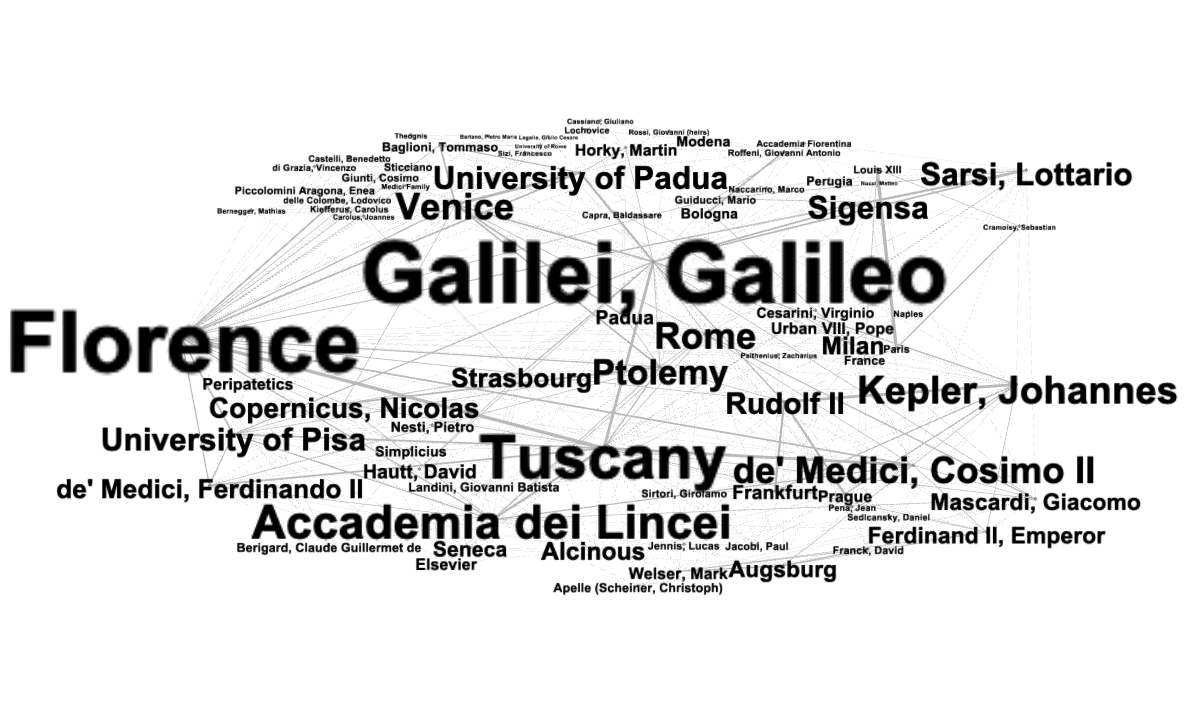
Figure 8. Gephi network of title pages of the 152 books of astronomy in Galileo’s library (a searchable, interactive version is available at bowdoin.edu/~chall/AstroNtwk/index.html). Node color is uniform. Edges between nodes indicate that they are mentioned together on a title page; thickness of the line is relative to the number of times the nodes are mentioned together. Node and label size indicates degree (number of connections). A Force Atlas layout algorithm was used to emphasize interconnected subgroups with Label Adjust for clarity. Image credit: Crystal Hall.
Figure 9. Subgraph of the Gephi network of title pages of the 152 books of astronomy in Galileo’s library, highlighting connections to Galileo. While Italian sites are prominent, multiple European cities are at the periphery alongside contemporary Austro-German natural philosophers. Of the 2,386 edges in the full graph, Galileo’s texts account for 175 (7.3 percent). Node color is uniform. Edges between nodes indicate that they are mentioned together on a title page; thickness of the line is relative to the number of times the nodes are mentioned together. Node label size indicates degree (number of connections). A Force Atlas layout algorithm was used to emphasize interconnected subgroups with Label Adjust for legibility. Image credit: Crystal Hall.
Location in HSS Commons repository
Please see 'Notes' below for any suggested/official citation information added by the author(s) of this work. Otherwise, you can cite the HSS Commons instance of this publication as follows:
- Crystal Hall, (2026), "Supplementary Material of ‘Print Networks of Early Modern Astronomy in Galileo’s Library’", HSSCommons: (DOI: 10.25547/7ZR9-8Z14)
Tags
Notes
Hall, Crystal. 2025. “Print Networks of Early Modern Astronomy in Galileo’s Library.” In New Technologies and Renaissance Studies IV: The Changing Shape of Digital Early Modern Studies, edited by Randa El Khatib and Caroline Winter, 35–60. New Technologies in Medieval and Renaissance Studies 12. Iter Press. https://iterpress.org/9781649591197/new-technologies-and-renaissance-studies-iv/.
Publication preview
Iter Community
This publication belongs to the Iter Community group.
When watching a publication, you will be notified when a new version is released.