
Supplementary Material of ‘Moving Images and Text on Leonardo’s Codices: The Evolution of Drawing a Digital Edition.’
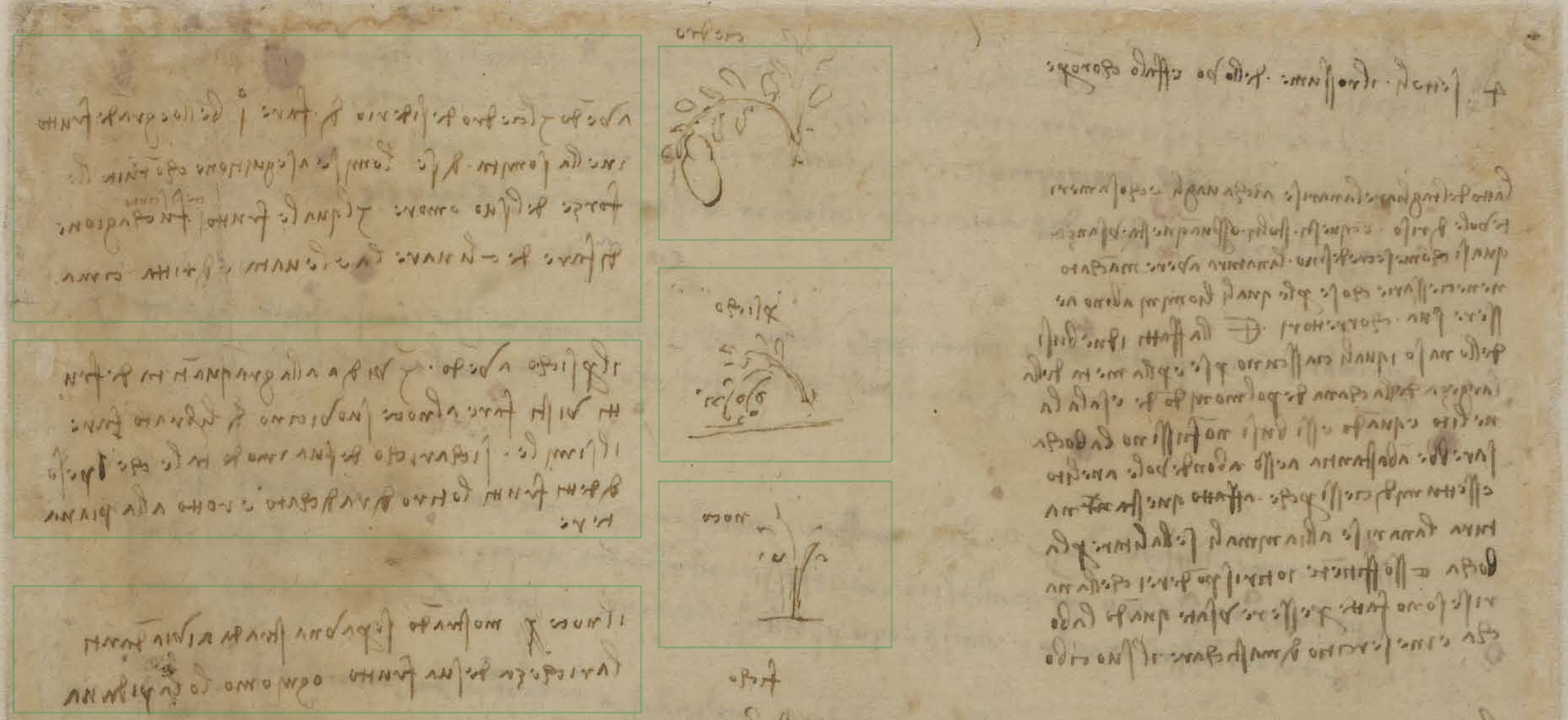
Figure 1. Leonardo da Vinci, fables of the citron, the peach, and the nut, with corresponding illustrations. Codex Atlanticus, fol. 207r. c. 1490. Biblioteca Ambrosiana, Milan.
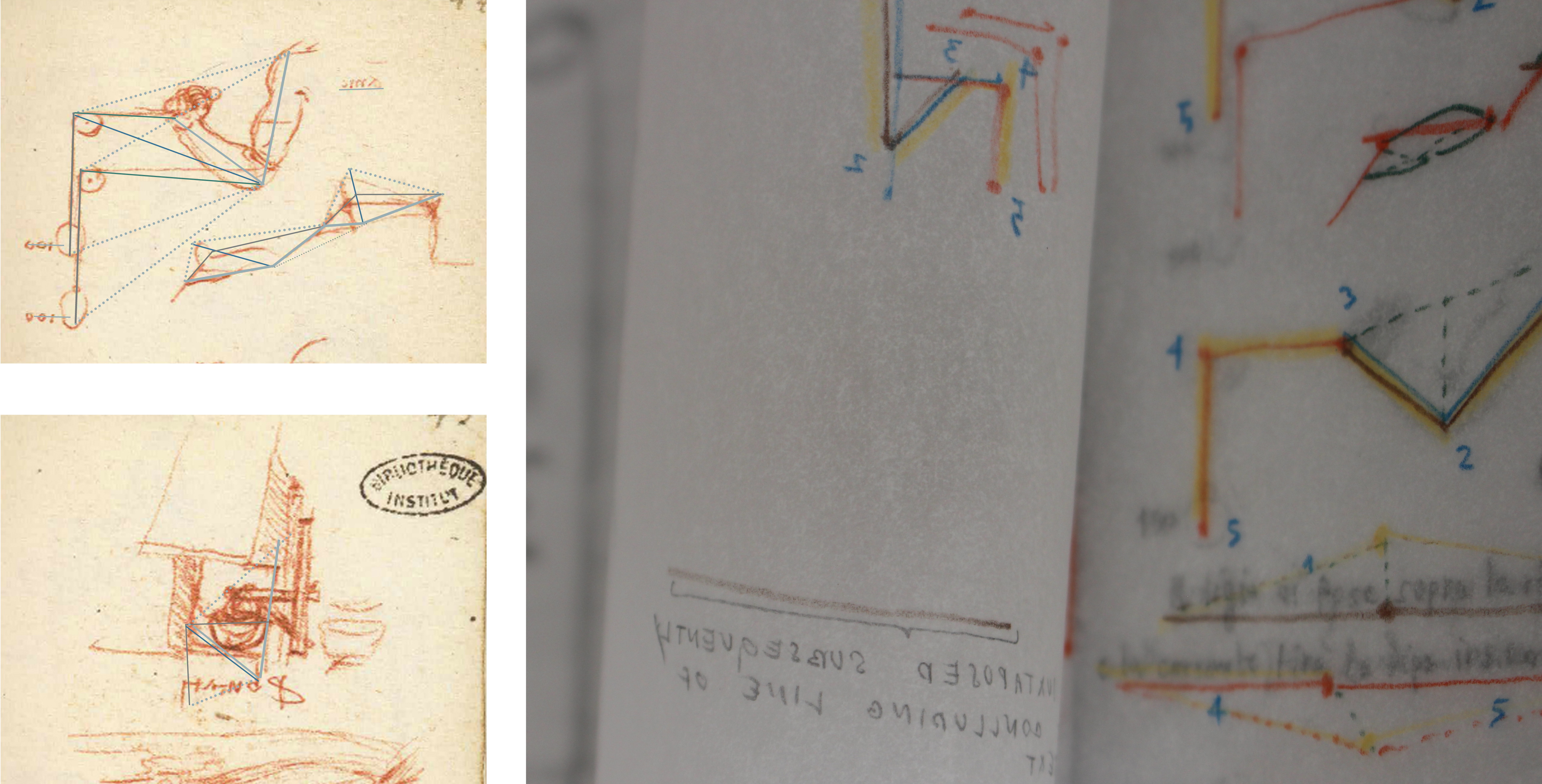
Figure 2. Left: Leonardo da Vinci, fable of the lily and…
Listed in Image | publication by group Iter Community
Version 2.0 - published on 27 Jul 2026 doi:10.25547/CPWA-SJ25 - cite this
Licensed under Creative Commons BY-NC 4.0



Description
Figure 1. Leonardo da Vinci, fables of the citron, the peach, and the nut, with corresponding illustrations. Codex Atlanticus, fol. 207r. c. 1490. Biblioteca Ambrosiana, Milan.
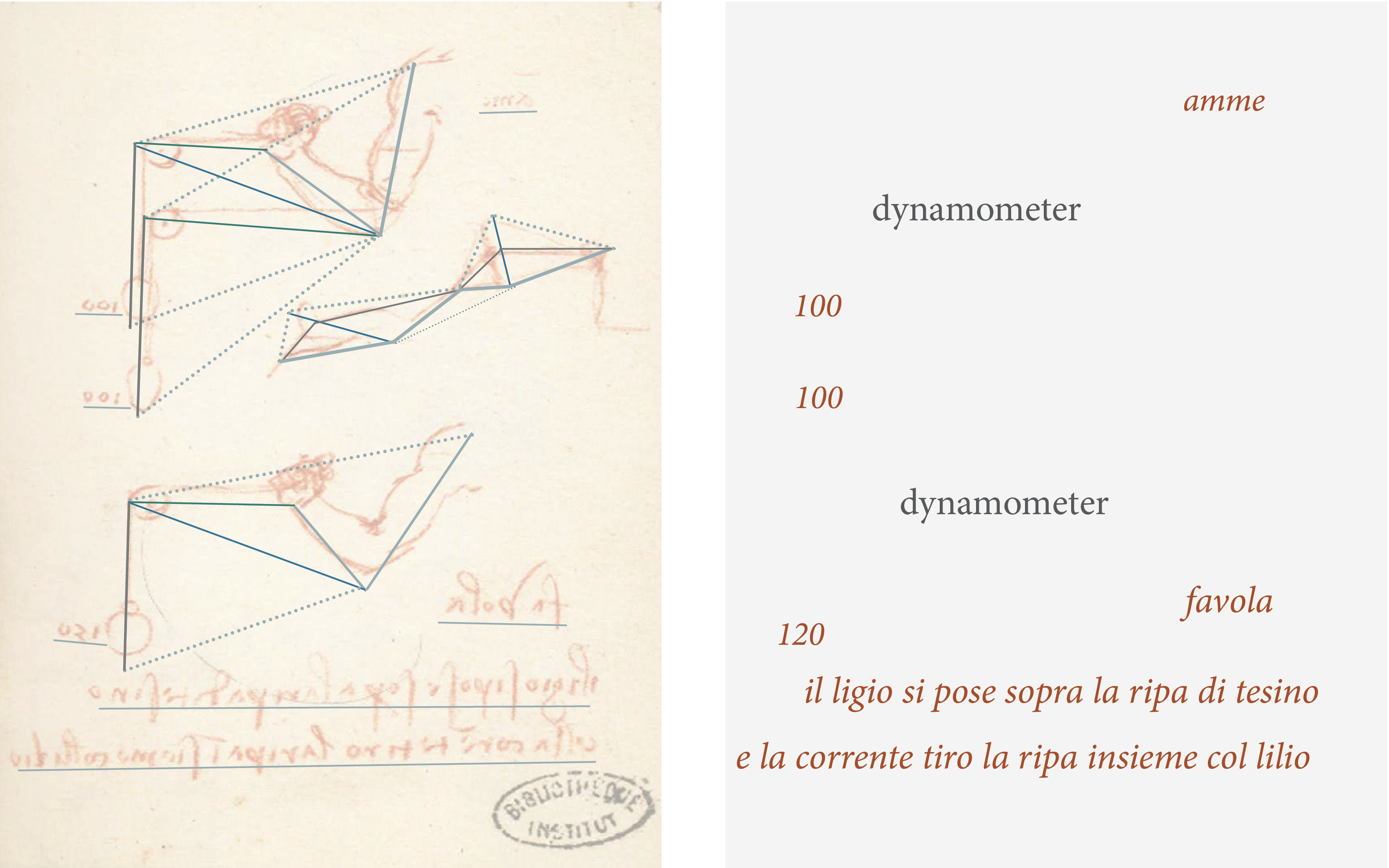
Figure 2. Left: Leonardo da Vinci, fable of the lily and dynamometers. Manuscript H, fol. 44r. 1493–94. Bibliothèque de l’Institut de France, Paris. Right: Leonardo da Vinci, emblem of the lily and diagrams and notes on geometry. RL 12,700v. 1508–10. The Royal Collection of Windsor, Berkshire.
Figure 3. Leonardo da Vinci, fable of the lily and dynamometers (top left), and the water well and the laundry cauldron (bottom left). Right: analytical drawing tables with diagrammatic notes. Manuscript H, fols. 44r, 43r. 1493–94. Bibliothèque de l’Institut de France, Paris.
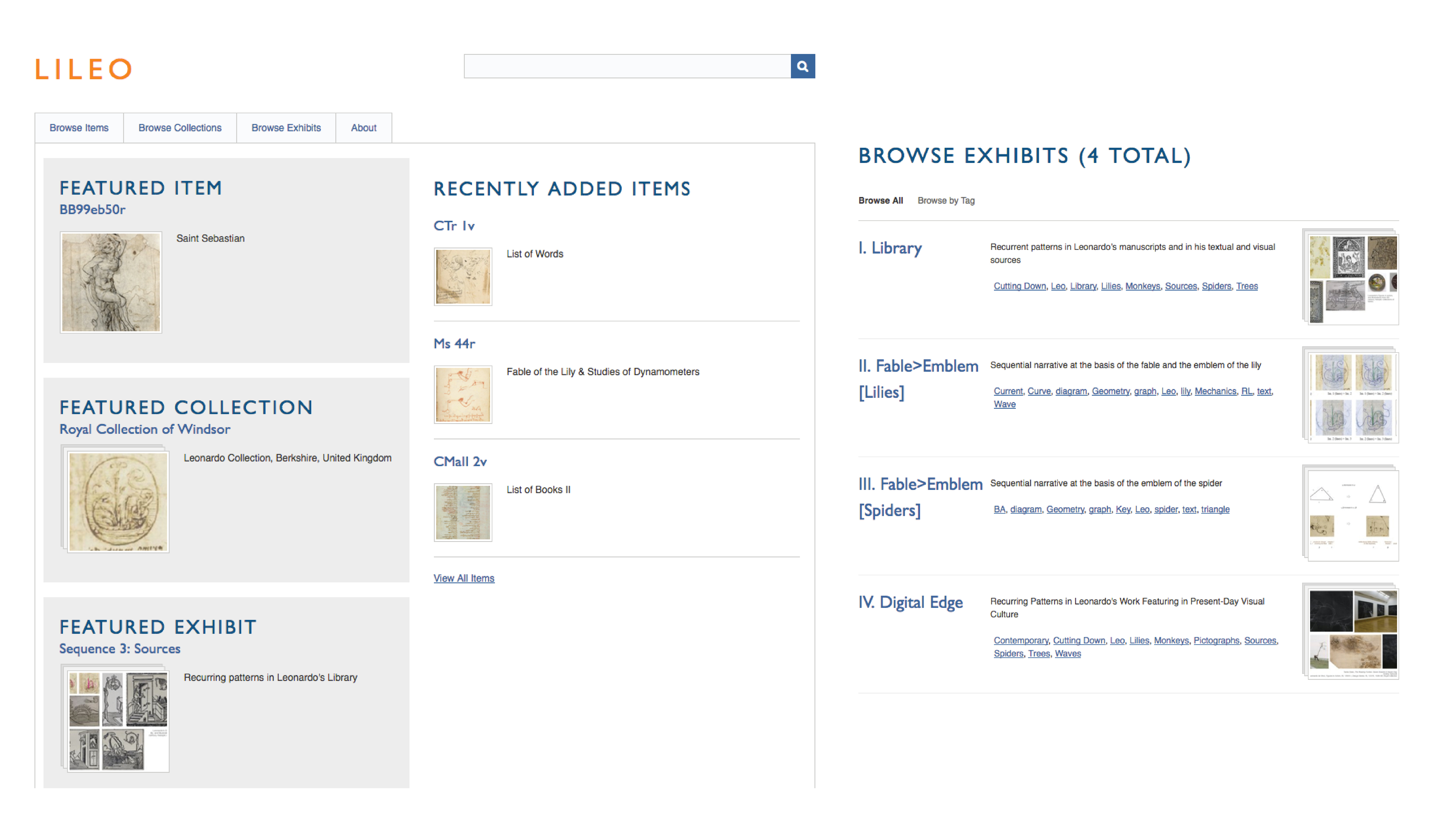
Figure 4. The LiLeo: Leonardo Library Archive home page, with the three featured sections—item, collection, and exhibit—which serve, respectively, to classify, organize, and interpret the data.
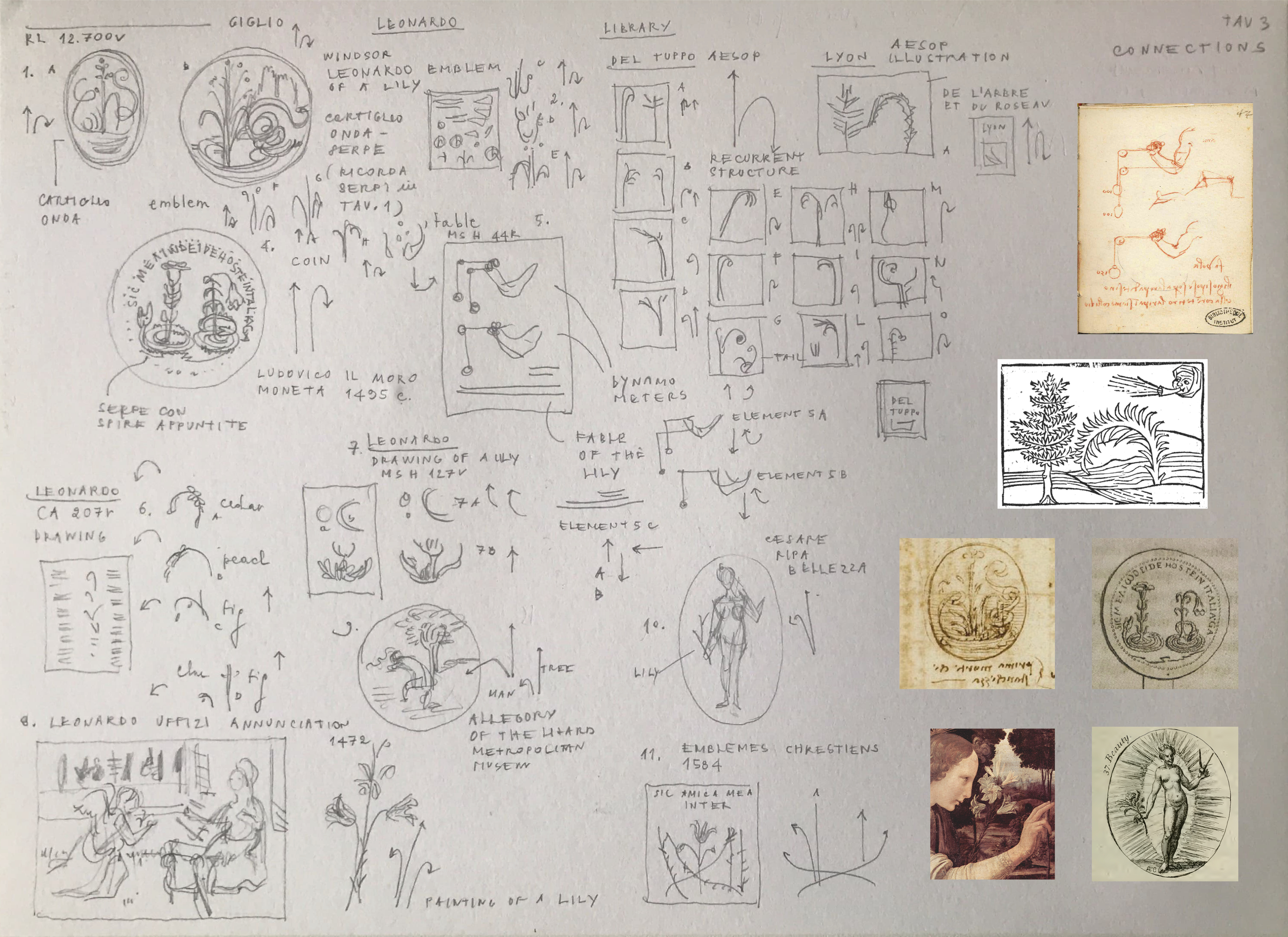
Figure 5. Table of Connections. Works by Leonardo, his sources, and contemporary cultural objects that feature related visual and textual structures on the subject of the lily.
Figure 6. TEI-XML transcription of the fable of the lily.
Figure 7. Studies for the LiLeo Beta Digital Edition home page, which shows a gallery layout that maintains the aspect ratio of individual images, with the graphic reproduction of pages that differentiate the presence of images and text and their material features.
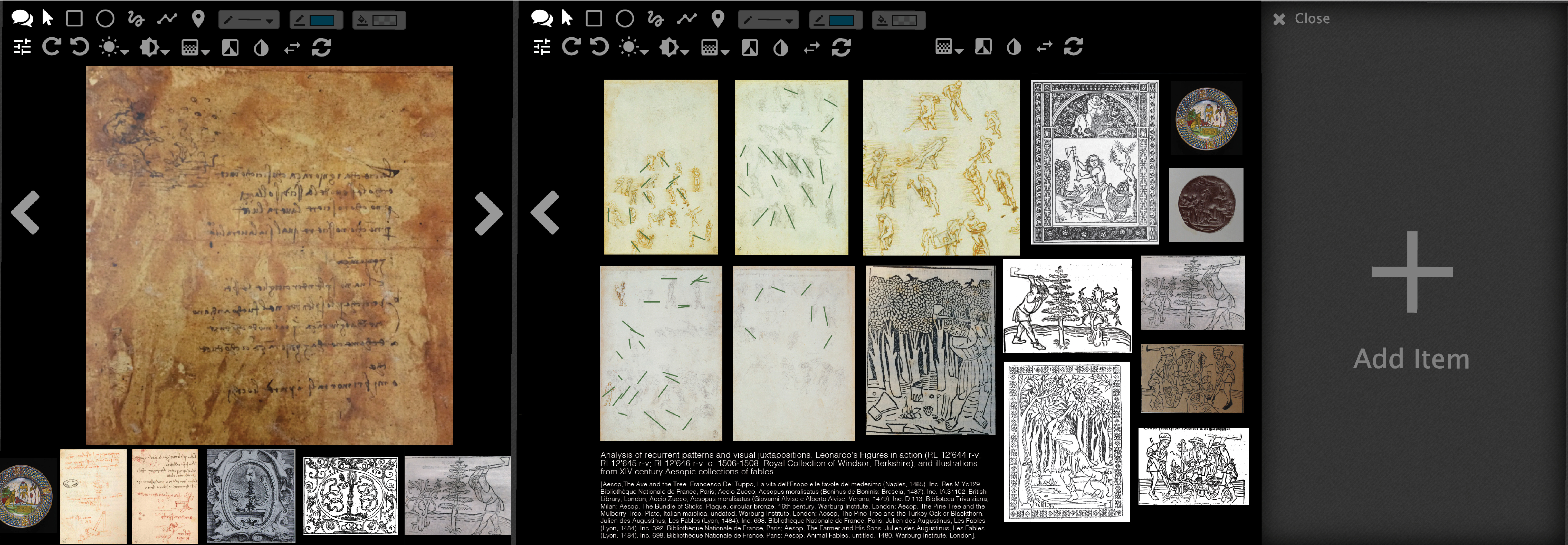
Figure 8. The LiLeo Beta Digital Edition tools for visualizing diagrams (Visualize>image tool) and transcriptions (Visualize>word tool).
Figure 9. The LiLeo Beta Digital Edition tools for connecting Leonardo’s folios with related drawings and writings (Connect>Leonardo tool) and his sources (Connect>sources tool).
Location in HSS Commons repository
Please see 'Notes' below for any suggested/official citation information added by the author(s) of this work. Otherwise, you can cite the HSS Commons instance of this publication as follows:
- Giuditta Cirnigliaro, (2026), "Supplementary Material of ‘Moving Images and Text on Leonardo’s Codices: The Evolution of Drawing a Digital Edition.’", HSSCommons: (DOI: 10.25547/CPWA-SJ25)
Tags
Notes
Cirnigliaro, Giuditta. 2025. “Moving Images and Text on Leonardo’s Codices: The Evolution of Drawing a Digital Edition.” In New Technologies and Renaissance Studies IV: The Changing Shape of Digital Early Modern Studies, edited by Randa El Khatib and Caroline Winter, 127–48. New Technologies in Medieval and Renaissance Studies 12. Iter Press. https://iterpress.org/9781649591197/new-technologies-and-renaissance-studies-iv/.
Publication preview
Iter Community

This publication belongs to the Iter Community group.
When watching a publication, you will be notified when a new version is released.